The Grimoire of Wataside
The Hidden Mechanics of The Covenant of Glass
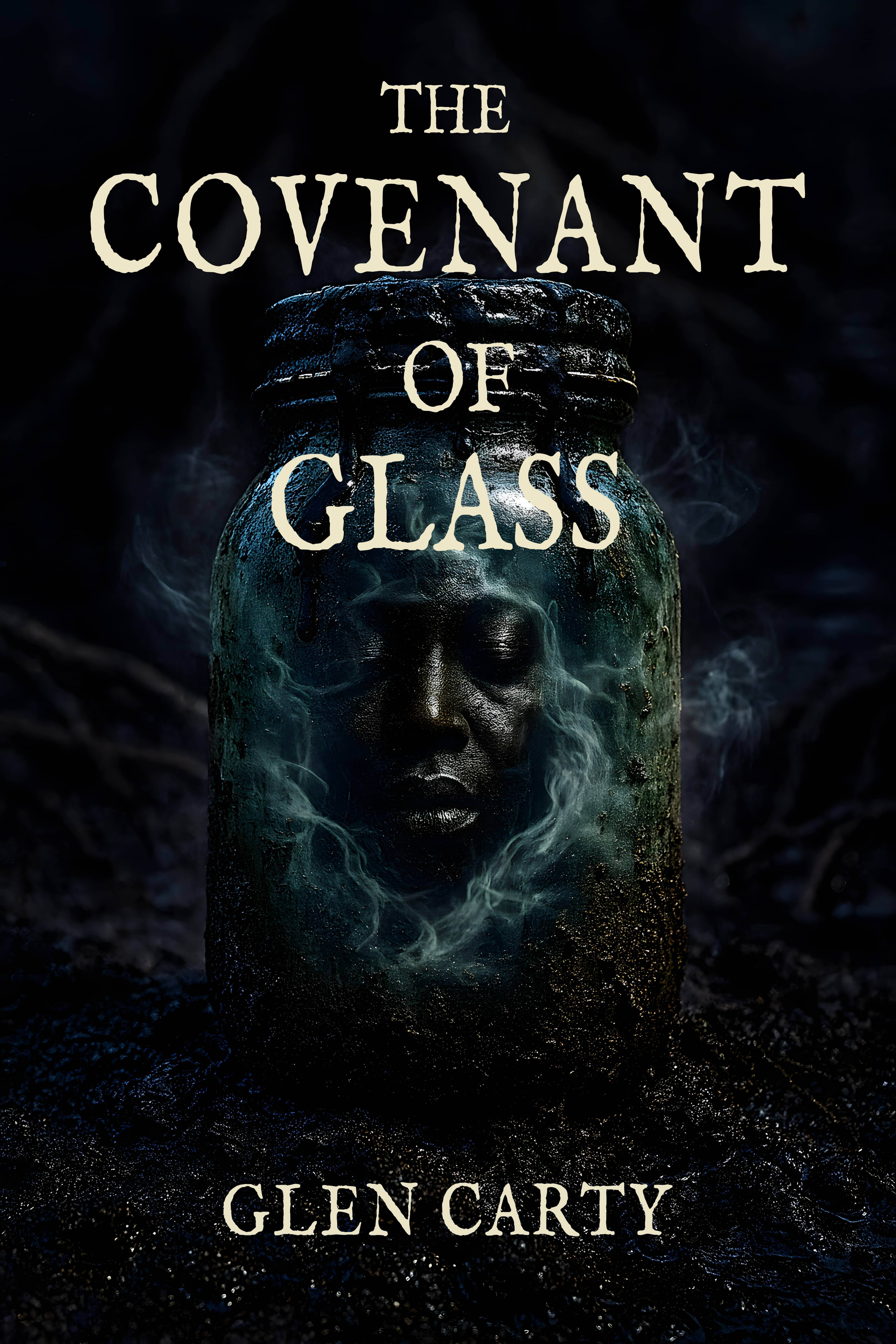
It is recommended that you read the book before entering the Archive.
1. The Origin: The Shadow from Chicago
To understand Elias, you must understand the distinction between "Roots" and "Science."
The Great Ban
In the early 20th century, a publishing house in Chicago run by L.W. de Laurence began flooding the Caribbean with mail-order grimoires. These books—specifically The Sixth and Seventh Books of Moses and The Great Book of Magical Art—claimed to offer power over spirits, elemental forces, and the will of others.
The Seepage
The colonial government of Jamaica banned these books, fearing their influence. Customs officers were ordered to seize and burn them at the ports. But the ban only increased their value. They were smuggled into deep rural villages and the crowded tenement yards of Kingston, wrapped in brown paper, and whispered about in "Science Yards."
The Corruption
Elias represents the dark evolution of this era. He was not a traditional healer working with the earth. He was a "Science Man" who viewed magic as a technology of domination. He used these foreign rituals not to heal, but to bind the wills of the innocent—turning people like Marcia into currency for his dam.
2. The Physics of the Covenant
In the valley of Wataside, magic is not a gift; it is a transaction. The system Elias used is based on the ancient principle of Equivalent Exchange.
The Rule of Displacement
You cannot destroy energy; you can only move it. To stop a river from flowing, you cannot just block it—you must create a void elsewhere to hold the pressure.
The Law of the Single Seal
A jar can only hold one specific intent. Once the wax touches the glass, the circuit is closed forever. It cannot be reopened or topped up.
- The Result: Every return visit to Elias required a new vessel. A repeat customer did not just have one jar; they built a stack.
- The Architecture: This rule is why there were hundreds of jars. Elias wasn't just hoarding secrets; he was forcing the villagers to manufacture the "bricks" he needed to build the physical dam beneath the church.
The Currency
Elias traded in human emotion. Grief, jealousy, ambition, and shame are heavy energies. By bottling them, he created spiritual "weights" dense enough to anchor the river to the earth.
3. The Jars: A Field Guide
Elias’s "Bank" beneath the church was organized by the type of debt held within the glass.
-
Black Wax (The Daily Debt)
Small jars containing petty grievances, love spells, and minor curses. These formed the bulk of the "wall." -
Blue Wax (The Blood Debt)
Rare and dangerous. These jars contained the memories and wills of the living (like Samuel and Marcia). These were the heavy anchors. As long as the seal held, the victim remained in a state of fugue, physically alive but spiritually paralyzed. -
Silver Wax (The Judas Jar)
Unique. This jar contained the conscience of the gatekeeper (Pastor Williams). It acted as the "Lock" on the entire structure. Breaking it did not just release the Pastor’s guilt; it shattered the structural integrity of the entire dam.
4. The Bleeding Foundation
If the jars were buried in the foundation, how did Zion find Marcia’s jar in the river?
Elias built his vault under Thomas's church located on an old riverbank, but he underestimated the patience of water. For twenty years, the Peace River slowly eroded the mud beneath the concrete slab.
The Undercut
As the river ate away the earth, the outer layers of the "Jar Pyramid" lost their support. The foundation wasn't solid; it was crumbling from the bottom up.
The Leaks
Marcia's jar was not the only one. Over the decades, villagers would occasionally find jars washed up in the reeds—"loose bricks" that had tumbled out of the rotting structure. Marcia’s return was not a coincidence; it was the definitive signal that the dam was finally reaching its breaking point.
5. The Nature of Elias: The Shadow in the Mud
If Elias was a man, why did he dissolve like oil at the end?
Elias, through his hubris, chose to ignore the warning written in the book. He committed the ultimate transgression of the Obeah man: he became the Mortar.
To hold back a force as powerful as the Peace River, the glass jars were not enough. They needed a binding agent. Elias performed a ritual to bind his own spirit to the church foundation.
The Bi-Location Paradox
For twenty years, Elias existed in two states:
-
The Husk: His physical body remained in his hut in the cane fields. It withered, aged, and eventually became catatonic, kept alive only by the magical tether. This was a byproduct of his actions. The book had warned the consequencues of a dam made of glass:
To bind the river to the spot is to bind the binder to the spot. The Watchman cannot leave the Gate. - The Residue: His true essence—his soul—was poured into the concrete of the church foundation.
The Death
When the church exploded, it was not his physical body that was destroyed—it was his spirit's housing. The "shadow" Zion found in the mud was Elias’s soul, ripped naked from the foundation, shivering and exposed. When the earth swallowed him, it was not killing a man; it was purging a corruption.
6. The Lady (aka The River Mumma)
The entity Zion encounters at the river—the one referred to as "The Lady"—is not a ghost or a spirit of the dead. She is the consciousness of the ecosystem: the ancient vital force known in Jamaican lore as the River Mumma. In folklore, she is often associated with guarding gold or "keeping" the river's secrets; in Wataside, she is the water itself.
She is not Good or Evil: She is Elemental—gravity. She seeks balance.
The Theft: Elias stole "The Stone" (The Pulse) to stop the river’s flow. This put the river into a state of cardiac arrest for twenty years.
The Return: When Zion returned The Stone, he restarted the heart of the valley. The flood was not an act of vengeance; it was the rush of blood returning to a limb that had been asleep for decades.
7. The Strange Tongue
When Zion speaks in the "Prosecutor’s Voice," he is channeling the memory of the Stone.
The Stone is geologically ancient. It has "witnessed" everything that has happened on the riverbank for millennia. When Zion holds it, he is not possessed; he is simply translating the data recorded in the rock. He knows your secrets because the earth heard them forming before they were ever whispered.
8. The Strategy of the Stone
Why didn't the Lady just give Zion an instruction manual?
The Delivery
The Mechanics: As a spirit, the Lady cannot touch the earth directly; she needs a vessel of flesh to move physical objects. In Chapter 1, Zion sees her holding the Stone, but this was an illusion of the medium. She was using the water "like a glove" to push the Stone from her realm to his, suspending it in the current until his hand could take the weight.
The Trojan Horse
Elias and the Pastor were sensitive to intent. If Zion knew he was carrying a weapon to destroy the foundation, his fear would have radiated like a beacon. By keeping him ignorant, the Lady ensured he was "invisible." He was just a confused boy with a rock, allowing him to walk right into the enemy's stronghold.
The Anchor
The Lady knew Elias would try to possess the boy. She gave Zion the Stone because its spiritual weight acted as an "Anchor," making Zion’s soul too heavy to be displaced.
The Timing
The Stone could not be returned until the "Cap" (the church floor) was broken. Zion had to wait for the Pastor to shatter the Silver Jar to reveal the path to the water.
9. The Vessel Paradox: The Innocent Bait
Why did Elias target Zion?
The Lady’s strategy relied on a specific flaw in Elias’s vision: he could sense power, but he could not distinguish the source.
The Selection
The Lady chose Zion primarily for his Innocence. In a village saturated with "debt" and secrets, Zion was the only soul clean enough to touch the Stone without being corrupted by it.
The Grandmaster Move
Instead of hiding Zion, she used Elias’s hunger against him.
- The Misunderstanding: She knew Elias would mistake the Stone’s immense radiation for Zion’s own spiritual potential. He saw a "Perfect Vessel" rather than a delivery boy.
- The Invitation: She allowed Elias to "hunt" Zion. By letting Elias believe he was capturing a new body, she ensured he would pull Zion into the very center of his stronghold—the one place the Stone needed to go.
- The Protection: When Elias finally tried to possess the boy, he found that the "empty vessel" he coveted was actually filled with the unmovable weight of the earth.
Summary: Elias thought he was dragging a victim to the altar to save his own life. In reality, he was dragging the only weapon capable of killing him right to his own throat.