
Cassava
Manihot esculenta | Also known as: Tapioca, Yuca
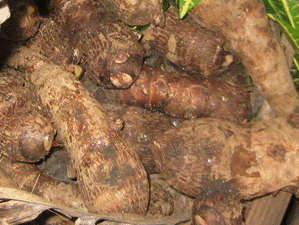
Cassava is a food staple for over 500 million people, and was eaten by the original inhabitants of the islands, the Taino[cite: 5].
In Europe it's probably better known as tapioca – Sloane called it tipioca[cite: 5]. It provides cassava meal, flour and is used in soups, puddings and many other foods[cite: 5].
Eating raw cassava tubers can kill[cite: 5]. It contains a cyanide, which is luckily destroyed by cooking[cite: 5]. The Taino apparently tipped their arrows with the poison, and are said to have eaten raw cassava rather than be caught and tortured by the Spanish invaders[cite: 5].
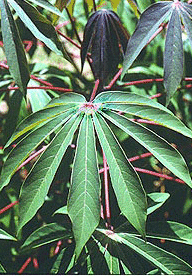 Today, selective plant breeding has reduced the risk, but cassava must still always be cooked[cite: 5]. The leaves are safe to eat and are a popular vegetable[cite: 5].
Traditional herbalists recommend the grated tuber as an excellent poultice for sores, also a paste of cassava flour added to pounded tobacco leaves[cite: 5].
The tubers can remain in the ground for up to three years without going bad, as they have a tough outer coat, and the cyanide in their hard white flesh protects them from insect attack[cite: 5]. So they are a very important food reserve against famine[cite: 5].
Cassava starch has a pleasant taste and smell and makes a good natural adhesive, so is ideal as a gum, for stamps and envelopes[cite: 5]. However, this use has declined since the 1950s[cite: 5].
Fermenting cassava produces a crude alcohol that smells disgusting[cite: 5]. It is used in industry, in making cosmetics, solvents and medicinal products[cite: 5].
