
Wild Spikenard
Also known as: Spikenard
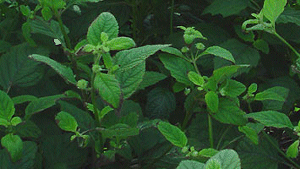
In the Caribbean, wild spikenard was traditionally used as an internal medicine to ease digestion and combat nausea and flatulence. Externally, it is commonly used as a mosquito repellent, because of its strong aromatic smell.
In Africa, it is similarly used for stomachache and colic as well as headaches and fever. It is also recorded as an antidote, as Sloane noted. It may also be given for colds and infections of the gall bladder and in baths to relieve pains and heal ulcers.
There is evidence that taking larger doses of this herb can lead to liver damage.
Wild spikenard comes from the warm and tropical Americas, but is now very widespread. In many places it's a problem weed, as it thrives in open places and can form dense thickets that smother the land and stop forests regenerating. It's typically found along river banks, roadsides, in waste areas and clearings. Its spiny seeds spread very easily in water and attach themselves to fur, clothing and mud.
Extracts from the plant are said to have antibacterial and antifungal properties, and may contain potential anti-cancer agents. Some records say it can act as a contraceptive by blocking a fertilized egg from implanting in the womb.
