
The Secret Coast: The Coves of Port Antonio
Coves, Beaches, and Cinematic Landscapes
While Port Antonio was forged through the hard logistics of trade and the unyielding spirit of resistance, it was cemented in the global imagination through its coastline. The unique limestone architecture of the parish has carved out a sequence of deep blue holes and sheltered coves that have served as both exclusive refuges for the world's elite and iconic backdrops for the silver screen. To walk this coast is to move through a landscape that feels perpetually undiscovered.
The Blue Lagoon remains perhaps the most enduring visual symbol of Portland’s nature-forward identity—a philosophy where the landscape is not merely a stage for human activity, but the primary architect of the experience. A spring-fed sinkhole that opens directly into the sea, its shifting indigo and turquoise tones are a physical record of the parish’s hydrology. The lagoon is the result of cold freshwater from submerged underground springs mixing with the warm saltwater of the Caribbean—a meeting of currents that led generations to believe the basin was bottomless.
Explore more...
Frenchman’s Cove holds a singular position in the history of Jamaican tourism. In the 1960s, it was established by billionaire Garfield Weston as an ultra-exclusive enclave, once regarded as the most expensive hotel in the world. It pioneered the concept of the all-inclusive experience for a clientele that included Prince Philip and a host of global dignitaries. Today, the cove has transitioned into a public space—a grounded, accessible landscape that still retains the quiet elegance of its "jet-set Mecca" past.
This rugged, "unspoilt" geography has long made Portland a preferred location for filmmakers. From the 1949 production of The Blue Lagoon to the cocktail-era glamour of the 1980s, the parish has been projected to global audiences as a site of romantic isolation. This cinematic history continues to fuel the town’s "cultural afterimage," allowing the coastline to exist as both a physical reality and a shared global dream.
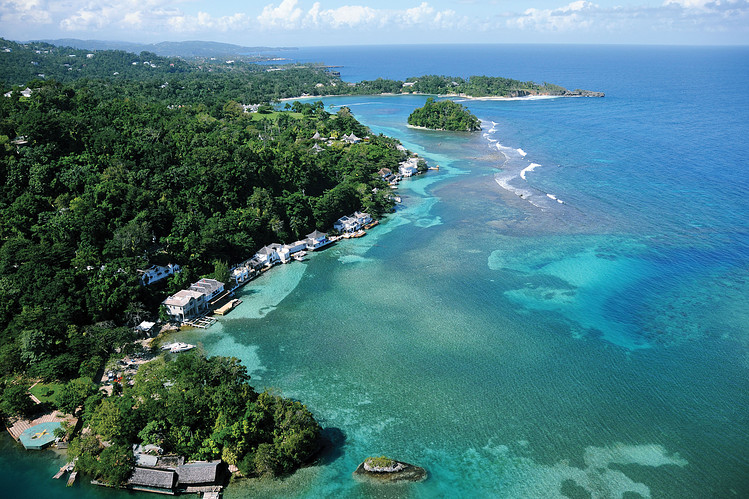
The arc of San San Bay and the nearby Monkey Island (Pellew Island) represent the mid-century exclusivity that kept Port Antonio distinct from the mass development seen elsewhere. Protected by a legacy of isolation and infrastructure that was historically difficult to navigate—a trait that once offered tactical advantages to the Maroons—these sites remain largely shielded from high-density change. Even as roads improve, the coast remains a relative "secret," rewarding those who prioritize the long view of history over modern convenience.