

The Fiwi Roots Collection is a curated archive of stories and articles that explore the traditions, histories, and lived wisdom of Jamaica. From cultural healing to ancestral memory, each piece is rooted in truth, identity, and the voices that shaped us.


Some stories were too layered, too untamed, or simply didn't fit The Timeline of Jamaica's chronological arc—but their echoes still resonate. These are Jamaica’s past stories and events that illuminate the untold or forgotten depths of our history. Check back often, as new chapters are unearthed and added regularly.
Long before Henry Cort’s fame, 76 Black metallurgists in Jamaica had already mastered a transformative iron process. This story challenges the origin myth of British industrialization.
Before Florence Nightingale, there was Mary Seacole—a fearless Jamaican healer who defied empire, war, and racism to serve on the front lines.
In 1760s Jamaica, an enslaved woman brought a case against her owner—and won. This rare glimpse into colonial justice raises questions still echoing today.
In the tapestry of Jamaica’s history, Black midwives and herbalists stand out as unsung heroines. But their stories remain largely invisible in official medical histories. Many faced persecution under “obeah” laws, which criminalized African-derived healing and spiritual practices.

Jamaica’s culture is as much about nourishment as it is about resilience. This section explores the living traditions that continue to shape how Jamaicans eat, heal, and thrive—where folklore meets science, and where health is inseparable from heritage.
From bush doctors to research labs, this feature explores how Jamaican plants and healing traditions are now helping to shape global medicine—and how, even in the 1600s, oral knowledge passed through midwives and root doctors stood alongside the meticulous catalogues of Hans Sloane. What was once passed down by word of mouth is now being studied, tested, and increasingly validated by science.
Used by midwives, healers, and fishers alike, this bitter bark carried more than pain relief—it carried memory. From childbirth to bush remedies, the Jamaican Dogwood tree tells the story of survival outside the bounds of formal medicine. Explore the cultural roots, scientific studies, and interactive trail map highlighting where it still grows and heals.
Once the domain of midwives, bush doctors, and Maroon healers, Guinea Hen Weed is experiencing a resurgence. This powerful Jamaican herb—long used for fever, cleansing, and spiritual protection—is now drawing global attention for its potential anticancer and immune-boosting effects. Explore the cultural roots, scientific studies, and interactive trail map highlighting where it still grows and heals.
From callaloo to ackee—learn which Jamaican dishes are diabetic-friendly, and how tradition plays a role in managing health today.
For individuals managing diabetes, the GI is a crucial tool because it helps predict a food's impact on blood glucose. When you eat carbohydrate-rich foods, your body breaks them down into glucose, which then enters your bloodstream.
Jamaican cuisine is rich, flavorful, and deeply rooted in cultural tradition. The good news is that diabetics can enjoy the foods they love in a healthier way. These meals can be adjusted without losing their essence, by making a few smart swaps and paying attention to preparation,

These are the stories that have been passed down through generations—stories that keep us up at night. Whispers of things that walk the roads after dark. River guardians. Spirits. Duppies. Whether told as warning, memory, or truth, these tales still hold power. Every child grew up hearing them, and it’s that telling and retelling that keeps them alive for generations to come.
Tales of restless spirits, strange encounters, and things that move when they shouldn’t. Every Jamaican knows someone with a story.
Stories about a fire-breathing duppy with glowing red eyes and chains that rattle in the dark. Said to haunt backroads and crossroads, the Rolling Calf is one legend Jamaicans don’t take lightly.
Stories about a mysterious spirit said to guard Jamaica’s rivers and hidden treasures. Often seen combing her hair by moonlight—then vanishing without a trace.
Feared, respected, and whispered about for generations, obeah lives at the edge of the visible world—woven into ritual, remedy, and silence. This piece explores it through story shaped by belief and oral tradition.

An exploration of Jamaica’s spiritual traditions rooted in African belief, shaped by struggle, and practiced through ceremony, healing, and praise. These are living systems of faith—still guiding, still evolving, still deeply woven into everyday life.
A sacred tradition born of struggle and spirit, Revivalism blends African spiritual roots with Christian faith in uniquely Jamaican ways. This four-part series explores its origins, beliefs, rituals, and lasting cultural power—still practiced, still evolving.
A profound awakening born from the shadows of colonial rule, Rastafari is not merely a religion but a livity—a conscious way of life rooted in African redemption and spiritual resistance. This four-part series explores its prophetic origins, core beliefs, the distinct mansions that shape its practice, and its evolution into an unbroken, global cultural force.

Grassroots Culture explores the street-level movements, sounds, styles, and stories born from community, resistance, and necessity. These are creative expressions that weren’t handed down from above—they rose up from below. Expressions of the people that evolved to uniquely define the Jamaican identity.
From backyard turntables to international stages, this series traces how Jamaica’s sound systems became more than music—they were a voice for the voiceless, a testing ground for legends, and a cultural force that shaped both Jamaica and its sound. With dub, echo, and live remixing, they transformed how music was made and felt.
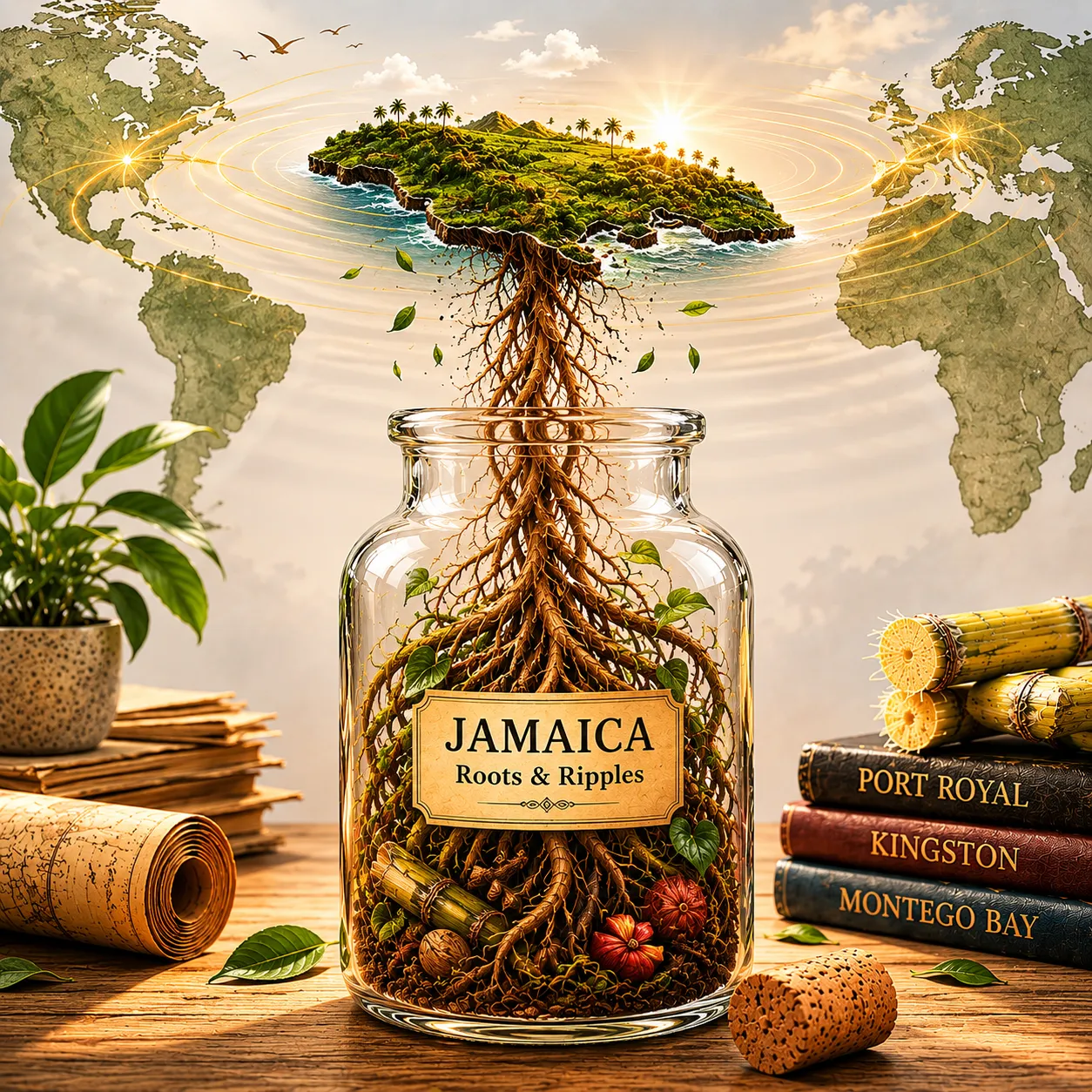
Roots and Ripples traces the quiet ways Jamaica shaped the world — through the plants it grew, the people it sent, and the ideas it refused to keep to itself. A small island with an outsized reach.
Long before Dole's pineapples became a household name and Hawaii became synonymous with the pineapple, a shipment of 1,000 plants left Jamaican soil in 1886, bound for Honolulu — a Pacific island capital half a world away. Six hundred survived the journey. What they seeded was an empire.
Jamaica produces the world's finest quality — and remains so dominant in global trade that the spice is virtually synonymous with the island. Known locally as pimento, it flavours cuisines from Jamaican jerk to Scandinavian pickles to Middle Eastern kofta, yet almost no one making those dishes knows where it came from.
For centuries, European dairy cows withered in the tropics, leaving nations near the equator with severe milk shortages. Discover how one scientist from the Blue Mountains quietly engineered a brand-new breed of cattle—solving a local poverty trap and fixing an agricultural deficit for millions across the developing world.
