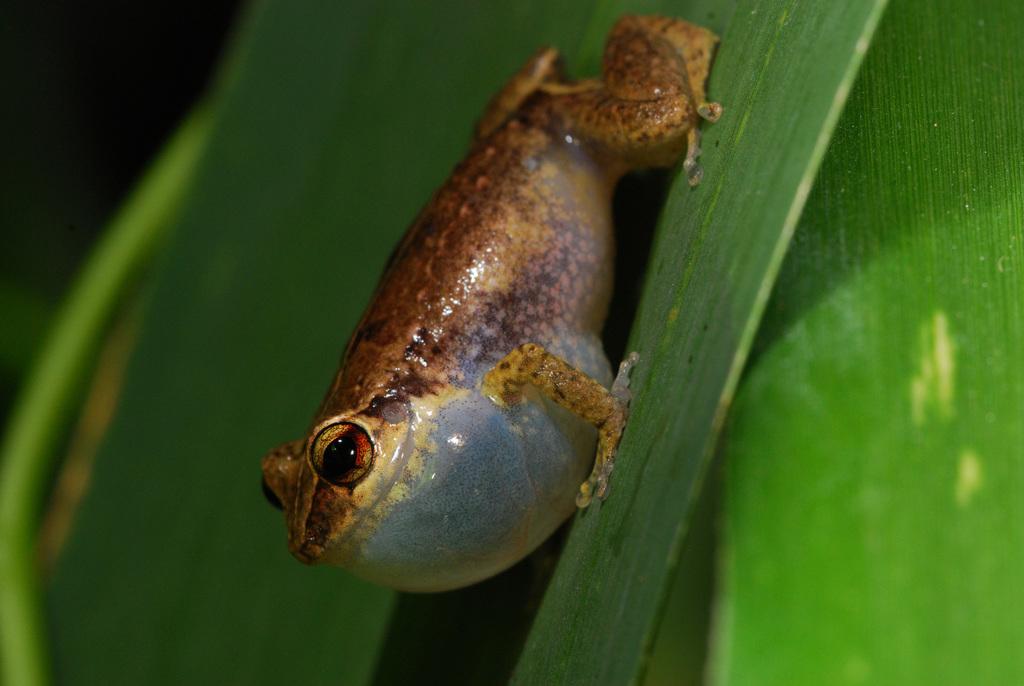

While Jamaica’s native amphibians exist nowhere else on Earth, the island's entire lineage belongs to just a single branch of the evolutionary tree: frogs. There are no native salamanders, newts, or legless caecilians here; instead, every single one of the island's 21 native frog species is completely endemic. This total reliance on a single group is a rare biological phenomenon born of isolation and necessity. In a landscape dominated by porous limestone, where rivers vanish underground and surface water is scarce, these creatures could not rely on traditional ponds or streams. Instead, they adapted to a world of mist, evolving to survive entirely within the humid canopy of cloud forests and the hidden, watery microhabitats of wild bromeliads.
The island's 21 endemic species are split into two distinct evolutionary branches:
- The Whistling Frogs (17 Species): This dominant group belongs to the Eleutherodactylus genus—small, highly vocal frogs. Their greatest evolutionary achievement is "Direct Development," a process where they completely sever their dependency on open standing water. Instead of laying eggs in ponds where swimming tadpoles must grow, these frogs deposit eggs in damp leaf litter, rocky recesses, or tree hollows. The entire tadpole stage is completed safely inside the egg capsule, allowing fully formed, miniature froglets to emerge ready to hunt.
- The Canopy Treefrogs (4 Species): The remaining native species belong to the Osteopilus genus. These are the larger, classic treefrogs (such as the distinctive Jamaican Snoring Frog) that possess specialized toe pads for climbing and spend their lives hunting and nesting high within the canopy or inside tree hollows.