
Belly Ache Bush
Also known as: Cotton-leaf Physic Nut
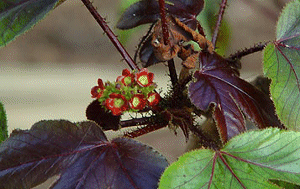
In Caribbean herbal medicine, the belly ache bush is well known as a laxative. The leaves are boiled to make a laxative tea, or eaten like spinach, with the same effect. In Trinidad, they use the oil from the seeds as a purge. It is said to be like castor oil.
Purges can be dangerous. In many traditional medical systems, purges are thought to help by ridding the body of poisons and restoring a healthy balance. But this plant purges because it is poisonous. Taking it can make people and animals very ill.
The milky sap from its stems can also irritate skin and be extremely painful if it reaches the eyes.
The belly ache bush is native to the Caribbean, tropical Central and South America. It has been introduced as an ornamental plant across the world because of its pretty foliage (purple when young). In many places it’s now an invasive weed, as it can form dense thickets that keep out native plants and wildlife. It can be toxic to animals and people.
An oil from the plant is said to show antibacterial activity.
