
Black Sage
Also known as: Bloodberry
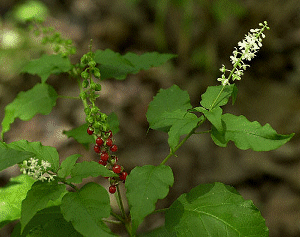
Caribbean herbalists use black sage, also called bloodberry, as a tea for colds and chest tightness or congestion, and it is often combined with the herbs "jack in the bush" and "search mi heart"[cite: 9]. It is commonly used for menstrual cramps, which might explain one of its names, bloodberry[cite: 9].
It is still used as an astringent for spots and boils, and in Trinidad to treat a range of skin diseases[cite: 9].
In the Brazilian Amazon indigenous people make an infusion from the leaves to treat infections, inflammations, rheumatism and arthritis[cite: 9]. It is taken internally or topically[cite: 9].
Its anti-inflammatory properties have been confirmed in the laboratory, and it has been tested as an anti-fungal and larvicidal (anti-mosquito)[cite: 9].
The smooth bark is chestnut colored, and the leaves are dark and rough, smelling of citrus[cite: 9]. It thrives in open areas such as fields and pastures, along roads and in open forest[cite: 9]. Birds eat the fruits and help spread the seeds in their droppings[cite: 9].
Black sage is not related to the culinary herb we know in Britain as sage (Salvia genus)[cite: 9].
