
Marijuana
Cannabis sativa | Also known as: Ganja, Cannabis, Hemp
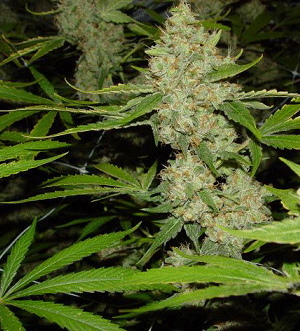
Cannabis has been used for medicinal and therapeutic purposes across various cultures for thousands of years. The term "cannabis" originates from Cannabis sativa, the botanical name of the plant widely known in Jamaica as ganja or marijuana.
Throughout the 1800s, cannabis was widely recognized and prescribed as an established medical treatment around the world. Its adoption into Western medicine accelerated following the research of Irish physician William Brooke O'Shaughnessy in the late 1830s. Doctors such as Jacques-Joseph Moreau de Tours subsequently utilized cannabis extracts to treat conditions including migraines, chronic pain, muscle spasms, and insomnia, leading to its inclusion in both the British Pharmacopoeia and the United States Pharmacopeia as a standard pharmaceutical tincture prior to the rise of modern synthetic analgesics like aspirin.
In Jamaica, traditional bush medicine utilizes preparations of ganja for various systemic ailments. Beyond standard smoking or inhalation, fresh leaves and flowers were historically drawn into teas, steeped in rum for topical rubs and liniments to ease joint pain, or combined with other local herbs for colds, fever, and asthma relief.
By the time the United States restricted access via the 1937 Marijuana Tax Act (becoming the third country to do so globally), clinical use had declined in western medicine, though traditional usage persisted uninterrupted across the Caribbean.
Marijuana preparations are derived from the dried leaves, floral tops, and resin of the plant. Potency varies based on cultivation, plant part, and method of preparation. Traditional Jamaican ganja preparations differ significantly in strength from refined concentrated extracts or hashish.
