Historic Buildings
Black River's surviving buildings preserve the outline of the town at its commercial height. Churches, merchant houses, residences and public spaces still show how wealth, trade, religion and civic life shaped the streets around the waterfront.
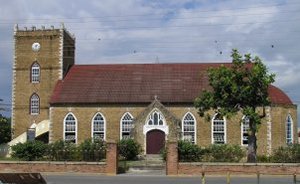
Black River Anglican Church
Known as the parish church, this brick building was constructed in 1837 at the corner of High and North Streets. Remains of an earlier church, built in 1774, are still visible at the site. The churchyard contains the graves of people associated with the history of the parish.
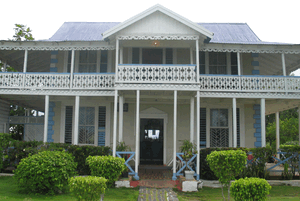
Waterloo House
Waterloo House on High Street is closely associated with Black River's electricity story. The Jamaica National Heritage Trust credits its later owner, John Leyden, with introducing an electricity generator and motor car to Black River and identifies Waterloo as the first residence in Jamaica to have electric lighting.
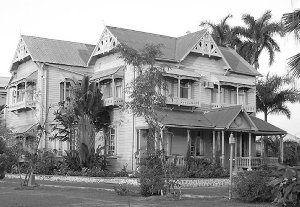
Invercauld
Located on High Street, Invercauld is a notable example of late Jamaican Georgian architecture and a reminder of the prosperity created by shipping and trade. Its broad verandas, fretwork and elevated form reflect architectural responses to the tropical climate.
Magdala House
Built in the late nineteenth century, Magdala House was constructed by Adolphus Williams for Tom Leyden. Leyden and his business partner William Farquharson were associated with the shipping and commercial life of Black River during the town's prosperous late nineteenth-century period.
The two-storey Victorian building is distinguished by decorative fretwork.
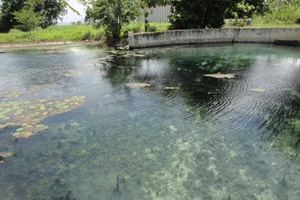
The Black River Spa
Formerly known as the Black River Mineral Springs, the spa was associated with the town for generations and became especially popular in the early twentieth century. Its cold mineral-rich spring was long believed to have therapeutic properties.
By the 1920s and 1930s the spa had developed baths for visitors. The site later fell into disrepair, but it remains part of Black River's social and recreational history.
Black River's built heritage tells only part of the story. Merchant houses and prominent public buildings survive more readily than the homes and workplaces of the laborers, craftspeople, domestic workers, boatmen and small traders who also sustained the town.